Stained Concrete in Greenwich, CT
A plain gray slab does not have to stay plain. We stain concrete in Greenwich, CT for lower levels, converted carriage houses, mudrooms, pool surrounds and terraces, then seal it for the salt, damp and winter cycling that come with life near the Sound.
What staining actually does to concrete
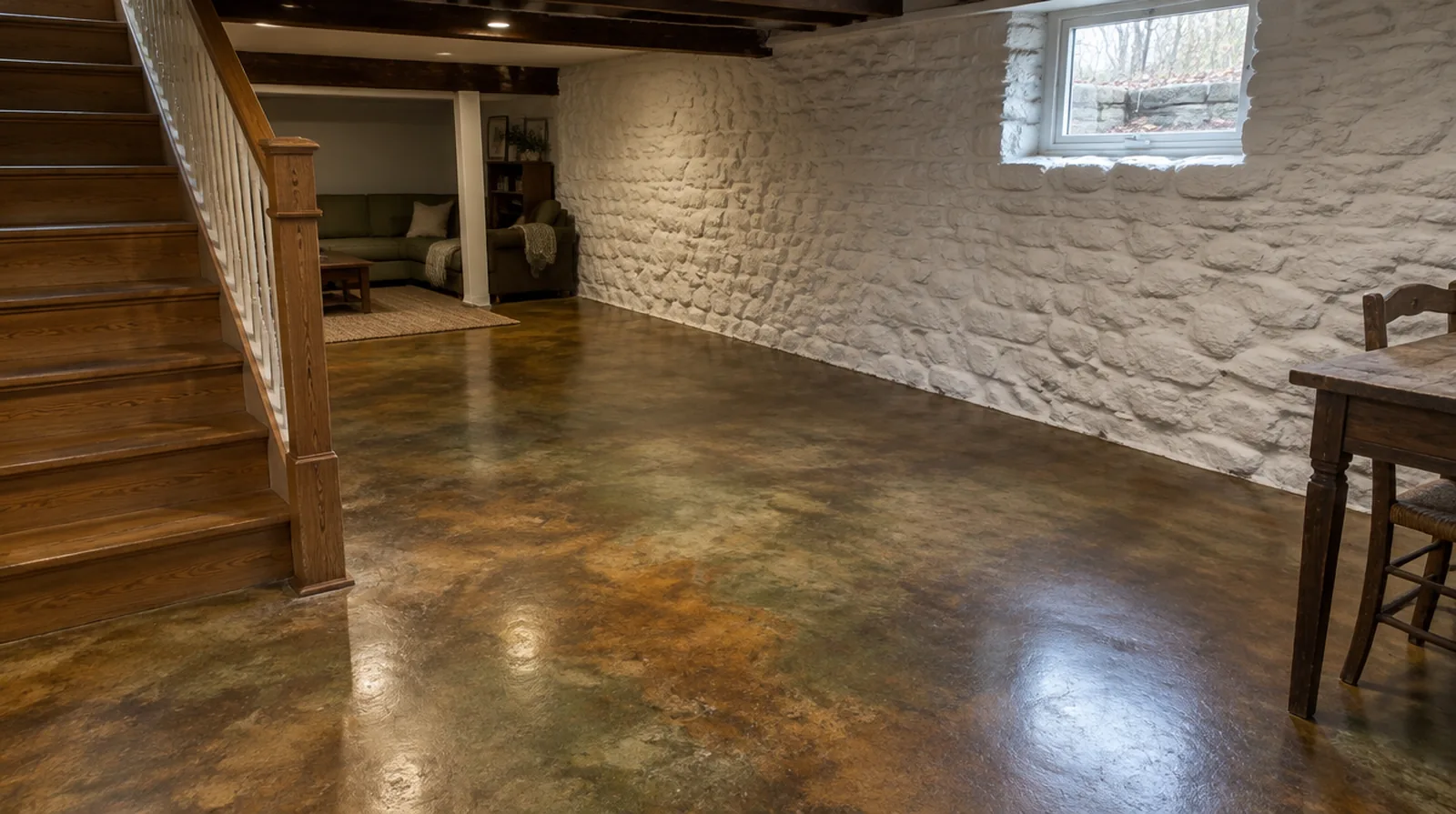
Stain is not paint. Reactive acid stain is a mix of water, mild acid and metallic salts that soaks into the top of the slab and reacts with the lime in the cement. The color forms inside the concrete, which is why it never looks perfectly even. You get mottling, darker clouds and lighter streaks that read more like leather or old stone than a flat coat. Water-based stain works differently. It carries fine pigment into the pores and gives a more predictable, uniform color, with a wider range that includes grays, charcoals and blues that acid stain cannot make.
Neither one hides much. Old patches, trowel marks, saw cuts and the ghost of a removed wall all show through, sometimes more clearly than before. For some owners that character is the whole point. For others, we suggest a thin skim coat first so the stain has a clean canvas.
Where it works well around Greenwich homes
Lower levels are the most common job. Plenty of colonials and Tudors in the older parts of town, from Riverside and Old Greenwich to the streets off North Street, have basement slabs that were never meant to be seen. Carpet in those spaces tends to smell damp by the end of summer, while a stained and sealed floor shrugs off humidity and can be wiped clean. We also stain floors in converted carriage houses and detached garages being turned into gyms, studios and wine rooms, where the owner wants something warmer than gray but tougher than wood.
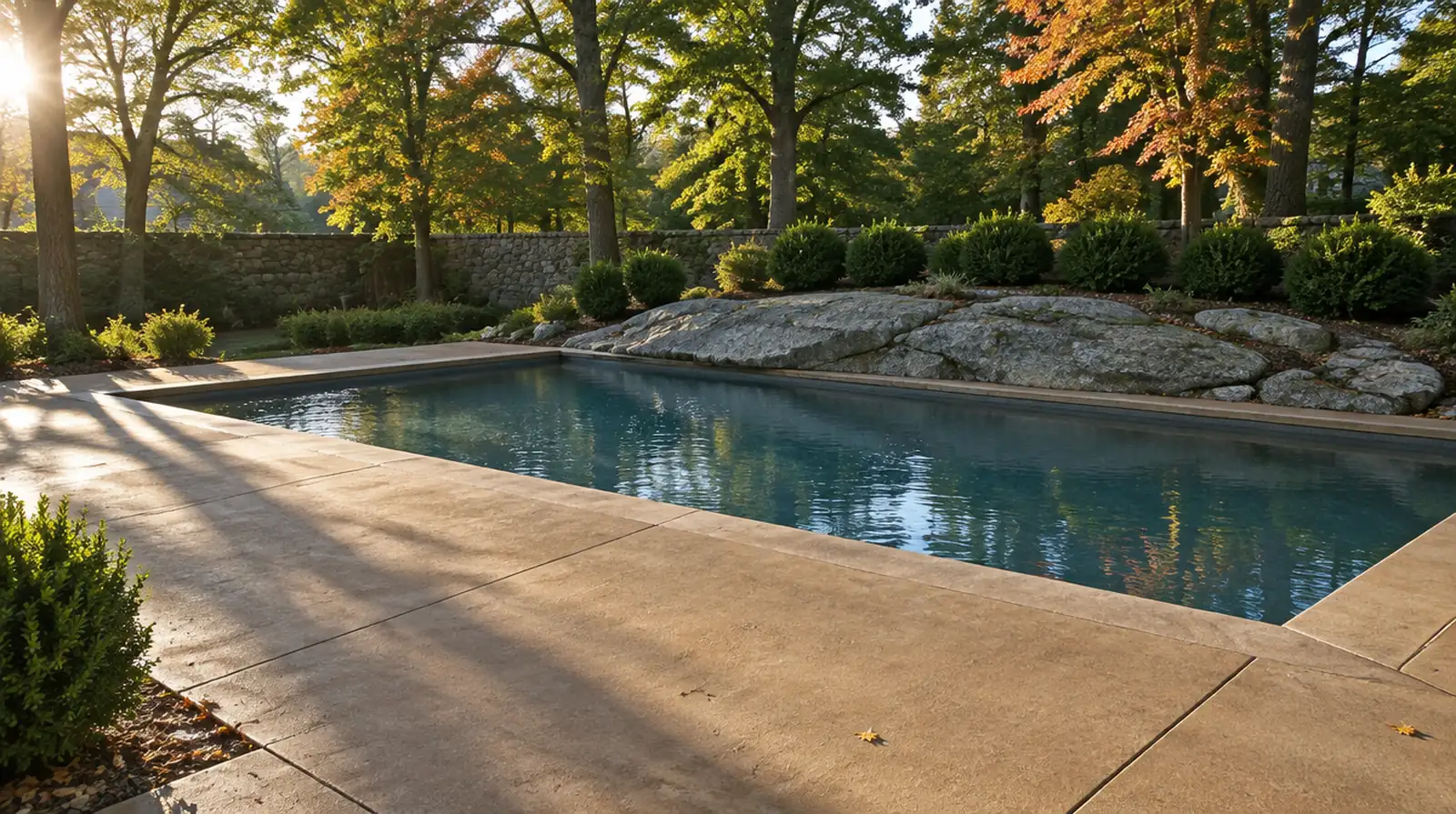
Outside, stain gives new life to pool surrounds, terraces and walkways that have faded to a blotchy gray. On backcountry properties where the patio sits next to exposed granite ledge, earthy browns and soft tans tie the concrete to the rock instead of fighting it. Near the water in Byram, Cos Cob and along Long Island Sound, we lean toward lighter tones that stay cooler underfoot in July.
Salt, moisture and winter
Stain itself does not wear off, but the sealer over it is what takes the abuse, and Greenwich winters are rough on sealers. Deicing salt carried in on tires and boots, standing meltwater and dozens of freeze-thaw swings each winter will dull a cheap topcoat in one season. On exterior work we use a breathable penetrating or high-solids sealer rated for freeze-thaw exposure and add a fine non-slip grit where people walk barefoot or wet. Inside, a water-based urethane or epoxy topcoat handles foot traffic and furniture.
Basement slabs bring their own issue. Groundwater moving through glacial till pushes moisture up through the floor, and too much vapor can lift a film-forming sealer into white blushes and bubbles. Before we quote an interior job, we tape down plastic sheets or run a moisture test to see how wet the slab really is, then choose a sealer that can tolerate it.
Our staining process
- Inspect and test. We look for old adhesives, paint and sealers, check moisture and do a small test patch, because two slabs poured the same day can take the same stain differently.
- Strip and clean. Coatings and glue come off by grinding. Then the floor is scrubbed so nothing blocks the stain.
- Apply color. Acid stain is sprayed and worked in by hand, sometimes in two colors, then neutralized and rinsed. Water-based stain is sprayed or rolled to the depth you picked.
- Seal. Two coats of the sealer suited to the location, with grit added outside.
Most basements are stained one day and sealed the next. Exterior work needs dry weather and slab temperatures above about 50 degrees, so outdoor staining here runs from late April into October.
New concrete or old
New slabs can be stained once they have cured for roughly four weeks. If you are planning a new terrace or garage floor, tell us before the pour. We can ask for a hard trowel finish inside or a light broom outside and keep curing compounds off the surface so the stain takes evenly later. Older concrete that is cracked, flaking or sunken should be fixed first. Our concrete repair work handles that, and for a patio that is too far gone, we can pour new and stain it once it is ready. If you want pattern as well as color, compare stain with stamped concrete.
Questions we hear
Will the color match the sample exactly?
Not exactly. Every slab reacts differently, which is why we test a corner first and show you the result before doing the whole floor.
How long does it last?
The color is permanent. Interior sealers usually need a fresh coat every few years, and exterior sealers every two to three years.
Do you work outside Greenwich?
Yes, including Stamford, Port Chester and Rye.
Talk to us about a stained floor or patio
Call (475) 267-2083. We will look at the slab, test how it takes stain in a hidden spot and give you a written price.