Concrete Slabs in Greenwich, CT
In Greenwich, a concrete slab is rarely just a slab. Ledge sits close to the surface on many lots, wetlands and watercourses thread through backcountry properties, and coastal storms knock out power often enough that standby generator pads are routine. We pour concrete slabs for Greenwich, CT homes and estates, from small equipment pads to garage floors and outbuilding foundations.
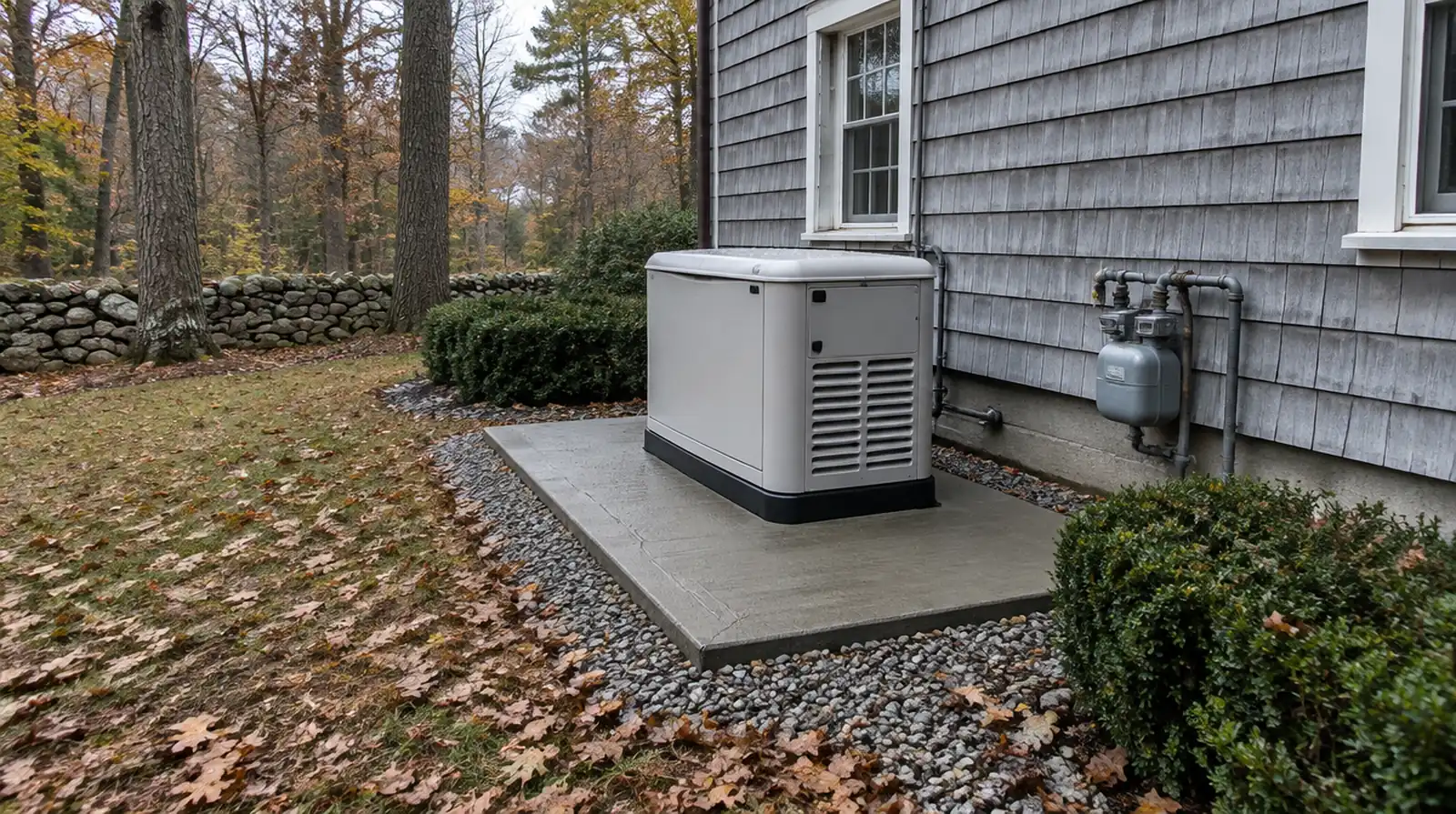
The slabs we pour
- Standby generator pads. Sized and leveled to the manufacturer's spec, set at the right distance from windows and doors, and coordinated with your electrician and gas utility.
- Pool equipment and HVAC pads. Flat, durable bases for pumps, heaters, filters and condensers.
- Garage and carriage house floors. Thicker reinforced slabs with a slight pitch toward the door or a drain.
- Sheds, studios and pool houses. Slab-on-grade foundations with thickened edges, ready for framing.
- Sport courts and play areas. Large, flat pours designed for coatings or surfacing.
- Basement and crawlspace slabs. New floors over dirt or broken concrete in older homes.
Working with ledge
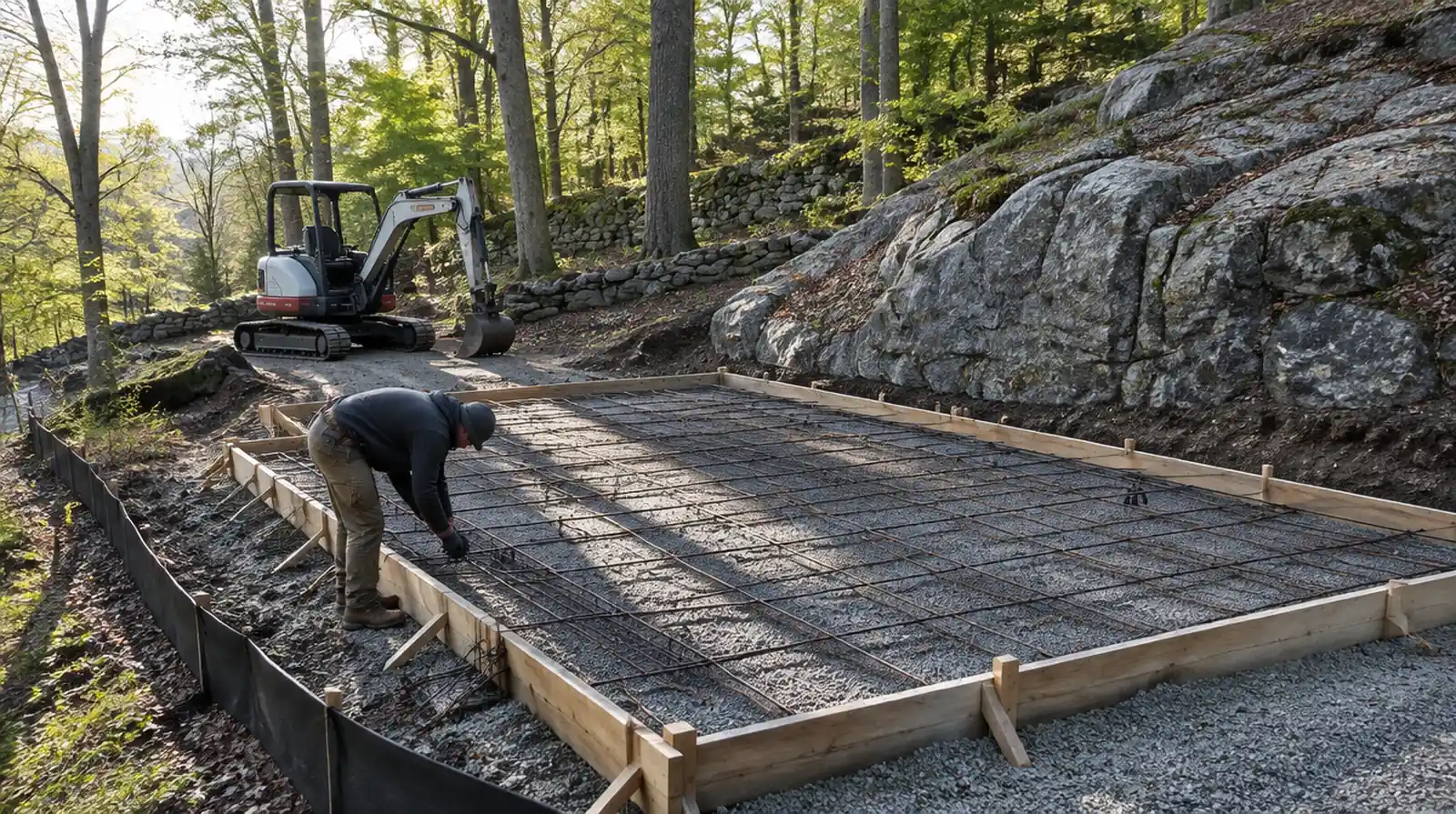
Much of Greenwich is underlain by hard crystalline bedrock, and on many lots it surfaces as ledge outcrops or sits a foot or two below the lawn. Hitting ledge does not stop a project, but it changes the plan. Depending on depth and the slab's use, we may:
- Raise the slab and build up the base with compacted stone rather than digging down.
- Use a hydraulic breaker on a small excavator to remove high spots.
- Pin or dowel thickened edges into sound rock where the design calls for it.
- Bring in an engineer and a blasting contractor when rock removal is extensive, which requires its own permits.
We dig test holes or probe during the estimate when ledge is likely, so the proposal reflects what is really in the ground.
Wetlands review and permits
Streams, ponds and wetlands run through a lot of Greenwich, especially in the backcountry and along the Byram and Mianus river corridors. Work in or near those areas, including in the regulated upland review area around them, generally needs approval from the town's Inland Wetlands and Watercourses Agency before work begins. That review covers excavation, grading and drainage as well as the slab itself. Conditions can include erosion controls, silt fence and planting buffers.
Structures like garages, pool houses and studios also need a building permit, and zoning rules govern setbacks and coverage. We help you figure out which approvals apply and work with your architect or engineer when drawings are required.
Frost, drainage and the coast
Connecticut winters freeze the ground deep. A slab that supports walls usually needs frost-protected footings or thickened edges designed to code, while a simple equipment pad sits on a deep, well-drained stone base to resist heaving. Every slab we pour has:
- A compacted gravel or crushed stone base of appropriate depth.
- Steel reinforcement or fiber, chosen for the load.
- Control joints to keep cracking in straight, planned lines.
- Air-entrained concrete for exterior slabs exposed to freeze-thaw.
- A pitch that moves water away from the house.
On waterfront properties in Old Greenwich, Riverside and Byram, flood zone rules may set how high equipment like generators and condensers has to sit. We build pads to the height your engineer or electrician specifies.
Access on estate properties
Long driveways, stone walls, specimen trees and finished landscaping are common on Greenwich properties. We plan truck routes, use boom pumps or line pumps when a mixer cannot reach, and protect lawns with mats so a slab behind the house does not mean a torn-up yard.
Scheduling around the seasons
The best pouring weather in Greenwich runs from April through November. Hot July afternoons speed up setting, so summer pours start early and fresh slabs are kept damp or covered while they cure. Late-fall work is possible with heated water, accelerators and insulated blankets, but we will not place concrete on frozen ground. If a generator needs to be in before winter storm season, call early in the fall so the pad, permits and electrical work can be lined up.
Related services
Slabs often go along with other projects. We also build concrete patios, driveways and retaining walls, and we repair cracked and sinking slabs through our concrete repair service.
Common questions
How thick should a slab be?
Typically four inches for light pads and sheds and thicker for garages or heavy equipment.
When can I set the generator?
Light equipment can usually go on after several days. Heavy loads should wait for more cure time.
Will a slab crack?
Most concrete develops small shrinkage cracks. Control joints, a solid base and proper curing keep them in planned lines.
Need a slab poured in Greenwich?
Call (475) 267-2083 to set up a site visit. We will look at access, ledge and drainage and give you a written proposal.